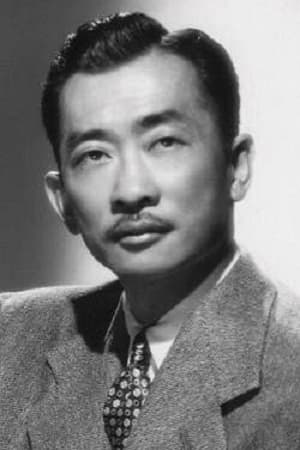
Richard Loo
- Profissão
- Representação
- Nascimento
- 1 de outubro de 1903
- Local de nascimento
- Maui, Hawaii, USA
- Falecimento
- 20 de novembro de 1983
Biografia
Richard Loo (October 1, 1903 – November 20, 1983) was an American film actor who was one of the most familiar Asian character actors in American films of the 1930s and 1940s. He appeared in more than 120 films between 1931 and 1982.
Chinese by ancestry and Hawaiian by birth, Loo spent his youth in Hawaii, then moved to California as a teenager. He graduated from the University of California at Berkeley and began a career in business.
The stock market crash of 1929 and the subsequent economic depression forced Loo to start over. He became involved with amateur, then professional, theater companies and in 1931 made his first film. Like most Asian actors in non-Asian countries, he played primarily small, stereotypical roles, though he rose quickly to familiarity, if not fame, in a number of films.
His stern features led him to be a favorite movie villain, and the outbreak of World War II gave him greater prominence in roles as vicious Japanese soldiers in such successful pictures as The Purple Heart (1944) and God Is My Co-Pilot (1945). Loo was most often typecast as the Japanese enemy pilot, spy or interrogator during World War II. In the film The Purple Heart he plays a Japanese Imperial Army general who commits suicide because he cannot break down the American prisoners. According to his daughter, Beverly Jane Loo, he didn't mind being typecast as a villain in these movies as he felt very patriotic about playing those parts.
In 1944 he appeared as a Chinese army lieutenant opposite Gregory Peck in The Keys of the Kingdom. He had a rare heroic role as a war-weary Japanese-American soldier in Samuel Fuller's Korean War classic The Steel Helmet (1951), but he spent much of the latter part of his career performing stock roles in films and minor television roles.
In 1974 he appeared as the Thai billionaire tycoon Hai Fat in the James Bond film The Man with the Golden Gun, opposite Roger Moore and Christopher Lee.
Loo was also a teacher of Shaolin monks in three episodes of the 1972–1975 hit TV series Kung Fu and made a further three appearances as a different character. His last acting appearance was in The Incredible Hulk TV series in 1981, but he continued to act in Toyota commercials into 1982.
Loo died of a cerebral hemorrhage on November 20, 1983, age 80.
[biography (excerpted) from Wikipedia]
Filmes com Richard Loo
- 007 - O Homem da Pistola Dourada 1974 · ★ 6.5
- A Volta ao Mundo em Oitenta Dias 1956 · ★ 6.7
- Yang-Tsé em Chamas 1966 · ★ 7.2
- Horizonte Perdido 1937 · ★ 6.9
- 5 Fingers 1952 · ★ 7.5
- O Último Chá do General Yen 1933 · ★ 6.3
- The Steel Helmet 1951 · ★ 7.0
- A Colina da Saudade 1955 · ★ 6.1
- Across the Pacific 1942 · ★ 6.6
- Road to Morocco 1942 · ★ 6.9
- The Good Earth 1937 · ★ 6.3
- Casa de Bambu 1955 · ★ 6.2
- Espirito Indomável 1945 · ★ 6.1
- O Demónio dos Mares 1954 · ★ 6.0
- Sangue de Bárbaros 1956 · ★ 3.6
- As Chaves do Reino 1944 · ★ 7.1
- China Seas 1935 · ★ 6.3
- A Farra dos Malandros 1954 · ★ 6.5
- The Quiet American 1958 · ★ 5.8
- Soldier of Fortune 1955 · ★ 6.0
- Kung Fu: The Way of the Tiger, the Sign of the Dragon 1972 · ★ 7.2
- Wake Island 1942 · ★ 5.8
- Doomed to Die 1940 · ★ 5.7
- Battle Hymn 1957 · ★ 6.7
- Confessions of an Opium Eater 1962 · ★ 5.7
- Pequena Clandestina 1936 · ★ 6.7
- So Proudly We Hail 1943 · ★ 5.7
- The Story of Dr. Wassell 1944 · ★ 6.3
- Mr. Wong in Chinatown 1939 · ★ 5.4
- Now and Forever 1934 · ★ 6.8
- The Fatal Hour 1940 · ★ 5.7
- Too Hot to Handle 1938 · ★ 6.1
- The Clay Pigeon 1949 · ★ 5.7
- Destination Gobi 1953 · ★ 5.9
- That Certain Woman 1937 · ★ 5.6
- One More Train to Rob 1971 · ★ 5.4
- To the Ends of the Earth 1948 · ★ 5.9
- Miracles for Sale 1939 · ★ 6.4
- Malaya 1949 · ★ 6.9
- The Falcon Strikes Back 1943 · ★ 5.6