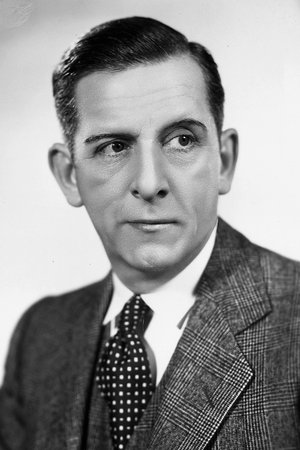
Edward Everett Horton
- Métier
- Interprétation
- Naissance
- 17 mars 1886
- Lieu de naissance
- Brooklyn, New York City, New York, USA
- Décès
- 29 septembre 1970
Biographie
From Wikipedia, the free encyclopedia
Edward Everett Horton Jr. (March 18, 1886 – September 29, 1970) was an American character actor. He had a long career in film, theater, radio, television, and voice work for animated cartoons. Horton began his stage career in 1906, singing and dancing and playing small parts in vaudeville and in Broadway productions. In 1919, he moved to Los Angeles, California, where he began acting in Hollywood films. His first starring role was in the comedy Too Much Business (1922), but he portrayed the lead role of an idealistic young classical composer in the drama Beggar on Horseback (1925). In the late 1920s, he starred in two-reel silent comedies for Educational Pictures, and made the transition to talking pictures with Educational in 1929. As a stage-trained performer, he found more film work easily, and appeared in some of Warner Bros.' early talkies, including The Terror (1928) and Sonny Boy (1929).
Horton initially used his given name, Edward Horton, professionally. His father persuaded him to adopt his full name professionally, reasoning that other actors might be named Edward Horton, but only one named Edward Everett Horton. Horton soon cultivated his own special variation of the time-honored double take (an actor's reaction to something, followed by a delayed, more extreme reaction). In Horton's version, he would smile ingratiatingly and nod in agreement with what just happened; then, when realization set in, his facial features collapsed entirely into a sober, troubled mask.
Horton starred in many comedy features in the 1930s, usually playing a mousy fellow who put up with domestic or professional problems to a certain point, and then finally asserted himself for a happy ending. He is best known, however, for his work as a character actor in supporting roles. These include The Front Page (1931), Trouble in Paradise (1932), Alice in Wonderland (1933), The Gay Divorcee (1934, the first of several Astaire/Rogers films in which Horton appeared), Top Hat (1935), Danger - Love at Work (1937), Lost Horizon (1937), Holiday (1938), Here Comes Mr. Jordan (1941), Arsenic and Old Lace (1944), Pocketful of Miracles (1961), It's a Mad, Mad, Mad, Mad World (1963), and Sex and the Single Girl (1964). His last role was in the comedy film Cold Turkey (1971), in which his character communicated only through facial expressions.
Films avec Edward Everett Horton
- Arsenic et vieille dentelle 1944 · ★ 7.6
- Un monde fou, fou, fou, fou 1963 · ★ 7.0
- Le Danseur du dessus 1935 · ★ 7.2
- Haute Pègre 1932 · ★ 7.4
- Vacances 1938 · ★ 7.3
- Les Horizons perdus 1937 · ★ 6.9
- Sérénade à trois 1933 · ★ 7.1
- Milliardaire pour un jour 1961 · ★ 7.3
- La Joyeuse Divorcée 1934 · ★ 6.9
- Le Défunt récalcitrant 1941 · ★ 7.0
- L'Entreprenant Monsieur Petrov 1937 · ★ 7.3
- La Huitième Femme de Barbe-Bleue 1938 · ★ 7.0
- The Front Page 1931 · ★ 6.4
- Une Vierge sur canapé 1964 · ★ 6.5
- Ange 1937 · ★ 6.7
- La Femme et le Pantin 1935 · ★ 6.4
- La Veuve joyeuse 1934 · ★ 6.8
- Alice au pays des merveilles 1933 · ★ 6.1
- Deanna mène l'enquête 1945 · ★ 6.6
- Banana Split 1943 · ★ 5.9
- La Danseuse des Folies Ziegfeld 1941 · ★ 6.6
- Remerciez votre bonne étoile 1943 · ★ 6.2
- Cold Turkey 1971 · ★ 6.2
- L'Étoile des étoiles 1947 · ★ 6.0
- L'Histoire de l'humanité 1957 · ★ 4.4
- Kiss and Make-Up 1934 · ★ 5.4
- Holiday 1930 · ★ 6.2
- One Got Fat 1963 · ★ 6.4
- La Bohème 1926 · ★ 6.4
- The Silver Screen: Color Me Lavender 1997 · ★ 5.3
- Reaching for the Moon 1930 · ★ 5.8
- Les femmes devraient écouter 1934 · ★ 5.9
- Forever and a Day 1943 · ★ 7.5
- Springtime in the Rockies 1942 · ★ 6.9
- L'aveu 1944 · ★ 5.6
- Une galante aventure 1937 · ★ 6.6
- Brazil 1944 · ★ 5.2
- Le Nigaud magnifique 1942 · ★ 7.3
- La Femme en cage 1937 · ★ 5.5
- Lonely Wives 1931 · ★ 5.3