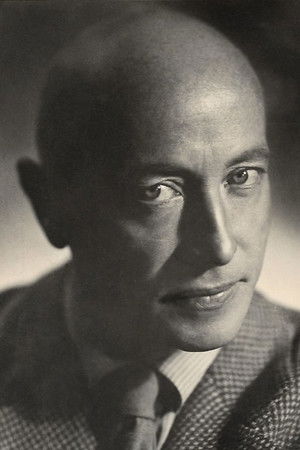
Hubert von Meyerinck
- Professione
- Recitazione
- Nascita
- 23 agosto 1896
- Luogo di nascita
- Potsdam, Germany
- Morte
- 13 maggio 1971
Biografia
Hubert von Meyerinck was born in Potsdam on August 23, 1896, the son of a major. After his parents divorced, he was raised by his mother. From an early age he showed a strong interest in acting and began taking lessons as a child, despite his parents’ wish that he pursue a career as a priest. After completing school, he was drafted into military service during World War I but was discharged shortly afterward for health reasons.
In 1917, he made his stage debut at the Berliner Schauspielhaus as Lieutenant von Hagen in "Kolberg." Following an engagement at the Hamburger Kammerspiele from 1918 to 1920, he performed at numerous Berlin theatres and variety venues, including the revue "Es liegt was in der Luft" alongside Marlene Dietrich. He earned acclaim both for his cabaret performances at the famed Tingeltangel and for dramatic stage roles such as Mephisto in "Faust" and Mackie Messer in "Die Dreigroschenoper."
At the beginning of the 1920s, von Meyerinck transitioned to film. After a significant early role in Georg Jacoby’s serial "Der Mann ohne Namen," he appeared in supporting roles in silent films including Artur Robison’s "Manon Lescaut" (1926) and Wilhelm Dieterle’s "Ich lebe für Dich" (1929). His distinctive appearance—bald head, monocle, thin moustache—quickly made him recognizable, and he became a popular character actor. He was often typecast as aristocrats, bourgeois figures, authoritarian officials, eccentrics, or crooks. With the arrival of sound film, his raspy voice further defined his screen persona.
Among his notable early sound films were Max Ophüls’ "Die verliebte Firma" (1931/32), Franz Wenzler’s "Wenn die Liebe Mode macht" (1932), and Kurt Gerron’s "Der weiße Dämon" (1932). During the Nazi era, he remained one of Germany’s most prolific and popular supporting actors, appearing in more than 90 productions between 1933 and 1945. These ranged from comedies such as "Ein falscher Fuffziger" (1935) to Willi Forst’s adaptation of Maupassant’s "Bel Ami" (1939) and Helmut Käutner’s "Kitty und die Weltkonferenz" (1939). He also took smaller roles in propagandistic films including "Ein Volksfeind" (1937) and "Trenck, der Pandur" (1940). Although it was widely known that he was homosexual, he was not prosecuted by the regime.
In the 1950s and 1960s, von Meyerinck successfully parodied his established authoritarian image in numerous comedies. In 1957 alone he appeared in 13 films, including the popular "Der tolle Blomberg" and "Das Wirtshaus im Spessart." He received the Prize of the German Film Critics in 1960 for "Ein Mann geht durch die Wand" and again in 1961 for "Das Spukschloß im Spessart." Another highlight was his role as an exuberant aristocrat in Billy Wilder’s Cold War satire "One, Two, Three." Between 1965 and 1969, he regularly appeared as Sir Arthur, head of Scotland Yard, in the Edgar Wallace film series.
Despite appearing in around 250 films, von Meyerinck remained committed to the stage and joined the ensemble of Hamburg’s Thalia Theatre in 1966. In 1968, he received a lifetime achievement award at the German Film Prize and published his memoirs. He died in Hamburg on May 13, 1971.
Film con Hubert von Meyerinck
- Uno, due, tre! 1961 · ★ 7.5
- Il barone di Münchhausen 1943 · ★ 6.5
- Das Wirtshaus im Spessart 1958 · ★ 6.9
- Neues vom Hexer 1965 · ★ 6.2
- La ragazza Rosemarie 1958 · ★ 5.8
- La Ballata dei Fantasmi 1960 · ★ 6.8
- Il teschio di Londra 1968 · ★ 6.4
- Il gobbo di Londra 1966 · ★ 6.1
- Il gorilla di Soho 1968 · ★ 5.2
- Ferien auf Immenhof 1957 · ★ 6.9
- I Rothschild 1940 · ★ 6.1
- L'uomo dall'occhio di vetro 1969 · ★ 5.5
- Giorni pazzi a Spessart 1967 · ★ 5.9
- Le vie segrete 1961 · ★ 5.5
- Die Abenteuer des Grafen Bobby 1961 · ★ 5.0
- Ein Mann geht durch die Wand 1959 · ★ 7.2
- Wenn die tollen Tanten kommen 1970 · ★ 4.8
- La ditta innamorata 1932 · ★ 6.4
- Manon Lescaut 1926 · ★ 5.9
- Wenn Ludwig ins Manöver zieht 1967 · ★ 7.5
- Vacanze a Ischia 1957 · ★ 6.2
- Bel Ami l'idolo delle donne 1939 · ★ 5.9
- Hallo Janine 1939 · ★ 6.7
- Charleys Onkel 1969 · ★ 5.0
- Fräulein Veronika 1936 · ★ 6.0
- Mein Mann, das Wirtschaftswunder 1961 · ★ 5.9
- Der müde Theodor 1957 · ★ 6.4
- Venus vor Gericht 1941 · ★ 5.6
- Nanu, Sie kennen Korff noch nicht? 1938 · ★ 7.4
- Der Florentiner Hut 1939 · ★ 7.5
- Das Herz der Königin 1940 · ★ 6.3
- Zwei in einer großen Stadt 1942 · ★ 6.3
- Was geschah in dieser Nacht? 1941 · ★ 6.0
- Kora Terry 1940 · ★ 5.5
- Otto ist auf Frauen scharf 1968 · ★ 3.6
- Freddy und der Millionär 1961 · ★ 5.4
- Ich und die Kaiserin 1933 · ★ 6.2
- Robert Koch, der Bekämpfer des Todes 1939 · ★ 6.6
- Salonwagen E 417 1939 · ★ 7.0
- Trenck, der Pandur 1940 · ★ 6.2