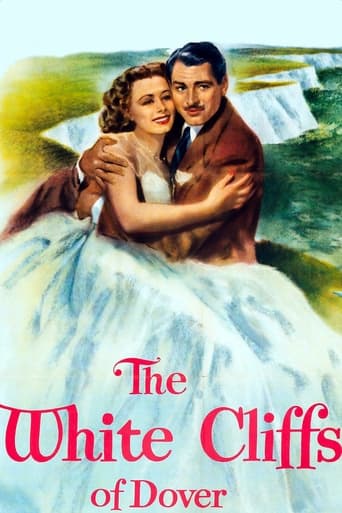
The White Cliffs of Dover (1944)
American Susan travels with her father to England for a vacation. Invited to a society ball, Susan meets Sir John Ashwood and marries him after a whirlwind romance. However, she never quite adjusts to life as a new member of the British gentry. At the outbreak of World War I, John is sent to the trenches and never returns. When her son goes off to fight in World War II, Susan fears the same tragic fate may befall him too.
- 上映日期
- 1944-05-11
- TMDB
- 6.7 / 10 (23)
- 片长(分钟)
- 2小时6分钟
- 类型
- 剧情, 战争, 爱情
- 导演
- Clarence Brown
演员阵容
- Irene Dunne — Susan Dunn
- Alan Marshal — John Ashwood
- 罗迪·麦克道尔 — John Ashwood II as a Boy
- 弗兰克·摩根 — Hiram Porter Dunn
- 范·约翰逊 — Sam Bennett
- C·奥布雷·史密斯 — Walter Forsythe
- 梅·惠蒂 — Nanny
- 格拉迪斯·库珀 — Jean Ashwood
- Peter Lawford — John Ashwood II as a Young Man
- John Warburton — Reggie Ashwood
- Jill Esmond — Rosamund
- Brenda Forbes — Gwennie
趣闻
- 获奖:0 · 提名:1
The White Cliffs of Dover is a 1944 American war drama film based on the verse novel The White Cliffs by Alice Duer Miller. It was made by Metro-Goldwyn-Mayer, directed by Clarence Brown, and produced by Clarence Brown and Sidney Franklin. The screenplay was by Claudine West, Jan Lustig and George Froeschel, with the credit for additional poetry by Robert Nathan. Nathan stated in an interview that he wrote the screenplay as his first work as a contracted writer for MGM but the studio credited Claudine West, who had died in 1943, as a tribute to her.
Production
The picture was released in May 1944, before the June 6 D-Day Allied landings in Normandy.
Among the many foreshadowings that would resonate with audiences is a scene set in the early 1930s, where two German brothers, sons of a prominent German manufacturer, visit the Ashwood estate. The younger boy remarks that the estate's large lawns would be ideal for military gliders to land - a premonition of the airborne attacks launched by Nazi Germany.
Herbert Stothart weaves a number of evocative pieces of music through his score, including: "Auld Lang Syne", "Hurrah Boys, for England", "Land of Hope and Glory", "My Country Tis of Thee"/"God Save the King", "Home! Sweet Home!", "Sweet Afton", "There's a Long, Long Trail", "Do ye Ken John Peel", "The Minstrel Boy to the War Has Gone", "Pack Up Your Troubles in Your Old Kit-Bag", "The Star Spangled Banner", "The Stars and Stripes Forever", "Over…
John dies and the film ends as American troops march triumphantly past the hospital, the bands playing "When Johnny Comes Marching Home". The last shot of the film is of the men marching toward the audience.
The film was a key early credit for Peter Lawford.
在维基百科阅读更多 · 文本来自维基百科,CC BY-SA 4.0。数据来自 Wikidata。