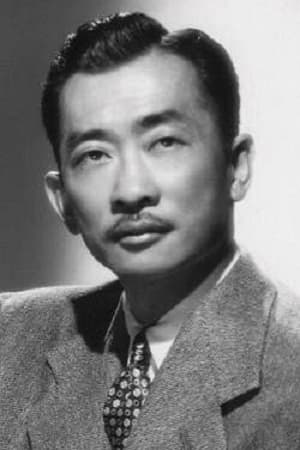
Richard Loo
- Profesión
- Actuación
- Nacimiento
- 1 de octubre de 1903
- Lugar de nacimiento
- Maui, Hawaii, USA
- Fallecimiento
- 20 de noviembre de 1983
Biografía
Richard Loo (October 1, 1903 – November 20, 1983) was an American film actor who was one of the most familiar Asian character actors in American films of the 1930s and 1940s. He appeared in more than 120 films between 1931 and 1982.
Chinese by ancestry and Hawaiian by birth, Loo spent his youth in Hawaii, then moved to California as a teenager. He graduated from the University of California at Berkeley and began a career in business.
The stock market crash of 1929 and the subsequent economic depression forced Loo to start over. He became involved with amateur, then professional, theater companies and in 1931 made his first film. Like most Asian actors in non-Asian countries, he played primarily small, stereotypical roles, though he rose quickly to familiarity, if not fame, in a number of films.
His stern features led him to be a favorite movie villain, and the outbreak of World War II gave him greater prominence in roles as vicious Japanese soldiers in such successful pictures as The Purple Heart (1944) and God Is My Co-Pilot (1945). Loo was most often typecast as the Japanese enemy pilot, spy or interrogator during World War II. In the film The Purple Heart he plays a Japanese Imperial Army general who commits suicide because he cannot break down the American prisoners. According to his daughter, Beverly Jane Loo, he didn't mind being typecast as a villain in these movies as he felt very patriotic about playing those parts.
In 1944 he appeared as a Chinese army lieutenant opposite Gregory Peck in The Keys of the Kingdom. He had a rare heroic role as a war-weary Japanese-American soldier in Samuel Fuller's Korean War classic The Steel Helmet (1951), but he spent much of the latter part of his career performing stock roles in films and minor television roles.
In 1974 he appeared as the Thai billionaire tycoon Hai Fat in the James Bond film The Man with the Golden Gun, opposite Roger Moore and Christopher Lee.
Loo was also a teacher of Shaolin monks in three episodes of the 1972–1975 hit TV series Kung Fu and made a further three appearances as a different character. His last acting appearance was in The Incredible Hulk TV series in 1981, but he continued to act in Toyota commercials into 1982.
Loo died of a cerebral hemorrhage on November 20, 1983, age 80.
[biography (excerpted) from Wikipedia]
Películas con Richard Loo
- El hombre de la pistola de oro 1974 · ★ 6.5
- La vuelta al mundo en 80 días 1956 · ★ 6.7
- El Yangtsé en llamas 1966 · ★ 7.2
- Horizontes perdidos 1937 · ★ 6.9
- Operación Cicerón 1952 · ★ 7.5
- La amargura del general Yen 1933 · ★ 6.3
- Casco de acero 1951 · ★ 7.0
- La colina del adiós 1955 · ★ 6.1
- A través del Pacífico 1942 · ★ 6.6
- Ruta de Marruecos 1942 · ★ 6.9
- La buena tierra 1937 · ★ 6.3
- La casa de bambú 1955 · ★ 6.2
- La patrulla del coronel Jackson 1945 · ★ 6.1
- El diablo de las aguas turbias 1954 · ★ 6.0
- El conquistador de Mongolia 1956 · ★ 3.6
- Las llaves del reino 1944 · ★ 7.1
- Los mares de China 1935 · ★ 6.3
- Viviendo su vida 1954 · ★ 6.5
- El americano tranquilo 1958 · ★ 5.8
- Cita en Hong Kong 1955 · ★ 6.0
- Kung Fu: The Way of the Tiger, the Sign of the Dragon 1972 · ★ 7.2
- Wake Island 1942 · ★ 5.8
- Sentenciado a muerte 1940 · ★ 5.7
- Himno de batalla 1957 · ★ 6.7
- Confessions of an Opium Eater 1962 · ★ 5.7
- Stowaway 1936 · ★ 6.7
- Sangre en Filipinas 1943 · ★ 5.7
- Por el valle de las sombras 1944 · ★ 6.3
- Mr. Wong in Chinatown 1939 · ★ 5.4
- Ahora y siempre 1934 · ★ 6.8
- The Fatal Hour 1940 · ★ 5.7
- Sucedió en China 1938 · ★ 6.1
- Acusado a traición 1949 · ★ 5.7
- Tempestad en Asia 1953 · ★ 5.9
- Aquella mujer 1937 · ★ 5.6
- Asalto al último tren 1971 · ★ 5.4
- Opio 1948 · ★ 5.9
- Miracles for Sale 1939 · ★ 6.4
- Malaca 1949 · ★ 6.9
- El Halcón a la defensiva 1943 · ★ 5.6