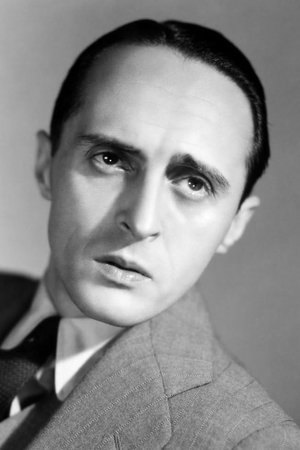
ルネ・クレール
- 職業
- 監督
- 生年月日
- 1898年11月11日
- 出身地
- Paris, France
- 没年月日
- 1981年3月15日
経歴
René Clair was a French filmmaker and writer. He first established his reputation in the 1920s as a director of silent films in which comedy was often mingled with fantasy. He went on to make some of the most innovative early sound films in France, before going abroad to work in the UK and USA for more than a decade. Returning to France after World War II, he continued to make films that were characterised by their elegance and wit, often presenting a nostalgic view of French life in earlier years. He was elected to the Académie française in 1960. Clair's best known films include The Italian Straw Hat (1928), Under the Roofs of Paris (1930), Le Million (1931), À nous la liberté (1931), I Married a Witch (1942), and And Then There Were None (1945).
In 1924, while Clair was working on Ciné-sketch for the theatre with France Picabia, he first met a young actress, Bronja Perlmutter, who subsequently appeared in his film Le Voyage imaginaire (1926) premiered at the newly opened Studio des Ursulines. They married in 1926, and their son, Jean-François, was born in 1927.
René Clair died at home on 15 March 1981, and he was buried privately at Saint-Germain-l'Auxerrois.
Clair's reputation as a film-maker underwent a considerable reevaluation during the course of his own lifetime: in the 1930s he was widely seen as one of France's greatest directors, alongside Renoir and Carné, but thereafter his work's artifice and detachment from the realities of life fell increasingly from favour. The avant-gardism of his first films, and especially Entr'acte, had given him a temporary notoriety, and a grounding in surrealism continued to underlie much of his comedy work. It was however the imaginative manner in which he overcame his initial scepticism about the arrival of sound which established his originality, and his first four sound films brought him international fame.
Clair's years of working in the UK and USA made him still more widely known but did not show any marked development in his style or thematic concerns. It was in the post-war films that he made on his return to France that some critics have observed a new maturity and emotional depth, accompanied by a prevailing sense of melancholy but still framed by the elegance and wit that characterised his earlier work.
However, in the 1950s the critics who heralded the arrival of the French New Wave, especially those associated with Cahiers du Cinéma, found Clair's work old-fashioned and academic. The paradox of Clair's reputation has been further heightened by those commentators who have seen François Truffaut as the French cinema's true successor to Clair, notwithstanding the occasions of their mutual disdain.
ルネ・クレールの出演作品
- En compagnie de Max Linder 1963 · ★ 7.4
- Les Trésors de Marcel Pagnol 2019 · ★ 8.0
- Le Lys de la vie 1920 · ★ 7.0
- Cinéastes de notre temps : Erich von Stroheim 2012 · ★ 5.0
- Parisette 1921 · ★ 7.0
- René Clair, tout entre nous n'était qu'un jeu 2021
- À la recherche de Jean Grémillon 1969
- Civilisation: L'homme et les images 1967
ルネ・クレールの監督作品
- そして誰もいなくなった 1945 · ★ 7.0
- 奥様は魔女 1942 · ★ 6.9
- Entr'acte 1924 · ★ 7.0
- À nous la liberté 1931 · ★ 7.0
- Le Million 1931 · ★ 6.8
- Paris qui dort 1925 · ★ 6.8
- It Happened Tomorrow 1944 · ★ 6.8
- 巴里の屋根の下 1930 · ★ 6.6
- La Beauté du diable 1950 · ★ 7.2
- Les Grandes Manœuvres 1955 · ★ 6.0
- The Ghost Goes West 1935 · ★ 6.7
- リラの門 1957 · ★ 6.6
- 夜ごとの美女 1952 · ★ 6.2
- The Flame of New Orleans 1941 · ★ 6.6
- Un chapeau de paille d'Italie 1928 · ★ 6.2
- Tout l'or du monde 1961 · ★ 6.5
- Le silence est d'or 1947 · ★ 6.9
- 巴里祭 1933 · ★ 6.6
- Le Voyage imaginaire 1926 · ★ 6.6
- フランス女性と恋愛 1960 · ★ 4.9
- Forever and a Day 1943 · ★ 7.5
- Les Quatre Vérités 1962 · ★ 4.2
- La Tour 1928 · ★ 6.3
- Le Dernier Milliardaire 1934 · ★ 5.7
- Le Fantôme du Moulin-Rouge 1925 · ★ 6.5
- Les deux timides 1928 · ★ 6.2
- Les Fêtes galantes 1965 · ★ 5.0
- La Proie du vent 1927 · ★ 6.3
- Break the News 1938 · ★ 7.5